Outdoor Classroom

What can you learn at Mills Riverside Park?
Mills Riverside Park serves as a community resource for recreation, education and wildlife viewing.
The park provides a dynamic, living classroom that enhances traditional education by transforming abstract textbook concepts into tangible, hands-on experiences. At the park, students can engage directly with local ecosystems, observe biodiversity in real time, and grasp environmental science through sensory exploration. Beyond the academic benefits, this beautiful space naturally lowers stress, sparks curiosity, and fosters teamwork, helping kids build a deep, personal connection to conservation right in their own community.
Explore these educational resources to learn more about Mills Riverside Park.

Monarch Butterflies
The Monarch waystation at Mills Riverside Park is the gateway to the park’s wide-open meadows that are important wildlife habitats.
Through its certified Monarch Waystation, Mills Riverside Park plays a vital role in protecting these iconic butterflies. This local effort helps safeguard the species and ensures that their spectacular migration continues for generations to come, and it connects the park to a world community working together to understand and communicate about the butterfly movement.
Learn more about the Mills Riverside Park's Monarch Waystation, its importance, history and how you can help.
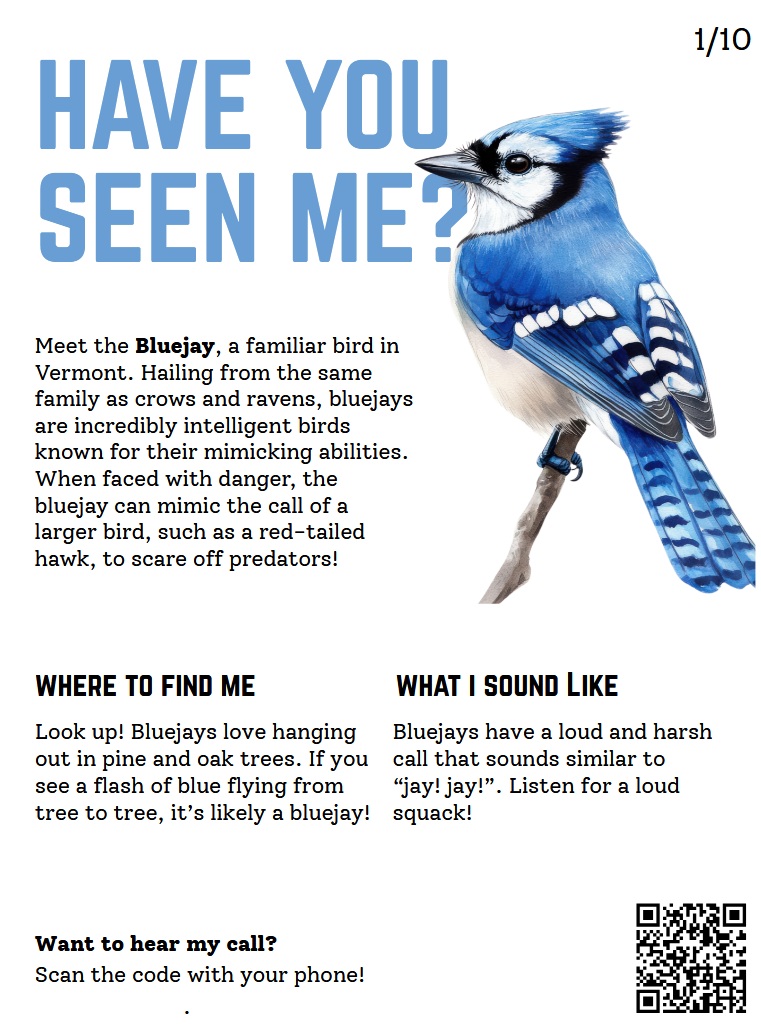
The Birds of Mills Riverside Park
Over 300 species of birds have been documented in the Jericho and Underhill areas of Vermont including year-round residents like the Black-capped Chickadee as well as seasonal visitors. Mills Riverside Park spans several bird ecosystems including open meadows, woodlands and forests and our riparian zones.
A UVM Environmental Studies senior project produced a Bird Scavenger Hunt checklist for 10 of the most frequently found birds at Mills Riverside Park.

The Trees of Mills Riverside Park
When winter strips the leaves from the branches, how do we recognize the familiar trees around us?
To help visitors identify a dozen common species in their winter state, two UVM botanists created this handy, printable guide. It features vibrant color photos of key winter characteristics and a step-by-step decision tree to help you easily identify each tree.